
In memory of Rafael Gomez Nieto, the anti-fascist COVID victim two wars could not kill, on the first anniversary of his passing…

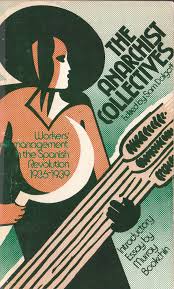
I became fascinated with a revolution that not only fought fascism, the 20th century's greatest danger (and perhaps becoming the 21st century’s as well), but while doing so also tried to build the groundwork of a new society. I had to learn more. I was further influenced by works like Sam Dolgoff and Murray Bookchin’s The Anarchist Collectives: Workers' Self-Management in the Spanish Revolution 1936-39.
I became convinced that Catalonia and Aragon had carried out the greatest experiment in real democratic socialism in human history, the creation of a new human society. A society where “the working class was in the saddle”, to use Orwell’s famous description of revolutionary Barcelona. Yes there had been other equally important attempts before, such as the Paris Commune of course and most of all the first years of the Russian Revolution. But for me the Spanish Revolution had the most to teach and offer. I finally finished my undergrad education in 1994, after a long six years of interspersing school with work, begging and borrowing money from family and the bank, as is the experience of many working class students. I considered life as an academic and pictured myself studying this vital period of human history in greater depth. That was not to be, as the need to work and my desire to experience more of life outside the “ivory tower” steered me down more practical paths.
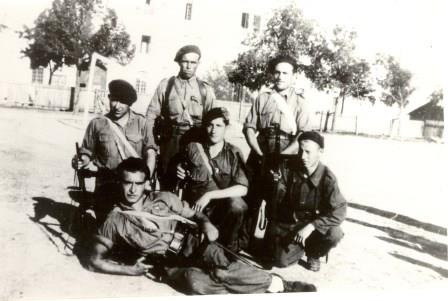
Several years after my college days, in the late 90’s, I stumbled onto the fact that a few of the heroes of the struggle in Spain were actually still alive. I yearned to communicate and possibly even meet some of them so that I could learn more about what they accomplished and where they failed. Perhaps a bit of juvenile hero worship grew in me as I found out that some of those survivors had not only fought fascism in Spain, but fought Hitler in France. A few even returned to fight Franco in Spain yet again at the close of the Second World War. What a life! What commitment to the struggle for human freedom! I love pointing out to folks, whenever I have the opportunity, the picture of the liberation of the Mauthausen concentration camp in Austria, which hangs prominently in several holocaust museums.
I ask them why the banners hung on the camp walls as the liberating soldiers enter are in Spanish. Few can answer as education about the Nazi concentration camp system rarely includes mention of the Spanish anti-fascists who made up a significant percentage of the population in a couple of the camps. I became fascinated by the lives of men like anarchist Antonio Téllez Solá, who as a teenager fought Franco’s rise in his native Catalonia, only to be exiled to a French concentration camp like tens of thousands of his comrades after Franco’s victory. Téllez Solá’s years of struggle continued, escaping the camp and fighting the Nazi occupation of France with a band of Spanish guerrilla. After the liberation of France in 1944, Téllez Solá turned his attention back to Spain, taking part in an ill-fated invasion of Spain along with 6,000 other exiled Spanish leftists. This was followed by years of underground revolutionary activity moving between Spain and France.

The most haunting aspect for me of Guillermo del Toro’s powerful and popular film Pan’s Labyrinth, is its portrayal of these Spanish maquis. In the film they are portrayed as heroic protagonists in their battle with the cruel fascist Capitán Vidal. Those with less historical knowledge may even be led to believe, given their portrayal in the film, that these anti-fascists are on the verge of victory. In reality, their vain hopes of the world’s attention being drawn to the last holdout of fascism in Europe after Hitler’s defeat would prove to be mistaken.
Téllez Solá would in later life become the most significant chronicler of the Spanish maquis. It pains me that I could have possibly communicated in some way with Téllez Solá who passed away in 2005 at the age of 84. But of course I am one lazy son-of-a-bitch and I never attempted such a thing. Nor did I ever put in any serious effort at writing the book I fantasized about that would have offered insight into the lives of these men, who sadly there is so little written about, especially in English.
All this personal history crap is to say that because of all this the biggest loss for me last year to COVID-19 (I have been fortunate not to have lost anyone close to me) was the passing away at the age of 99 of Rafael Gómez Nieto last March. How’s that for burying a lead? Gómez Nieto survived the armies of Franco and Hitler, only to die a victim of this world-wide plague less than a year short of becoming a centegerany. Gómez Nieto, who I had not heard of prior to his passing, was not a revolutionary of the stature of Téllez Solá, but as a veteran of both the Spanish Republican Army and then the Free French Army, Gómez Nieto represented another of the few remaining living links to these extraordinary men of mid-century anti-fascist struggle. Gómez Nieto fought in the Battle of the Ebro in 1938, the largest battle of the Spanish Civil War and one of the Republican forces’ last stands against the advancing fascist armies. Like most other Spanish refugees at the war's end, he landed in a French concentration camp, only to later escape and join the Free French Army. His unit, the 9th Company of the French 2nd Armored Division, fought first in North Africa and later was the first Allied military unit to enter Paris as part of the Allied forces’ liberation of France. His company was made up mostly of Spanish Republicans, only a dozen of whom survived the war.
His passing once again kindled in me the fantasy of writing an article in honor of his passing that would have memorialized his comrades, as well and called attention to the grand social experiment they played a role in. But once again inertia proved much stronger than momentum. So it never happened. But as I look back at this horrible year of the pandemic, which entered its second year last month, Gómez Nieto’s passing on March 31st last year remains an open wound. So I pen these useless words here to say that at least I did something, and in the hope that I can draw attention to this man and his comrades, and to the the lessons of Spain that we could all very much learn from in the struggles we face ahead.
Comments
Post a Comment